
How to Clean a Slow Cooker: Ceramic Pot, Water Bath & Burnt Food
November 06, 2026
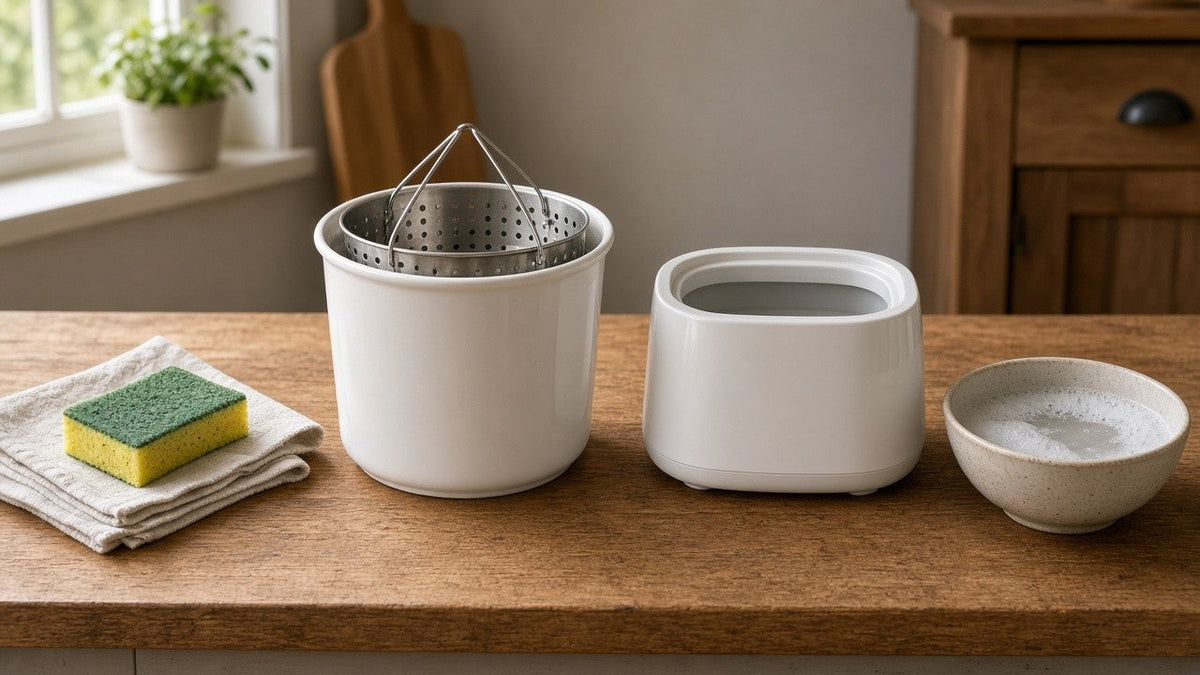
The stew was good. The ring around the ceramic pot the next morning is not. People search how to clean a slow cooker expecting a big stoneware Crock-Pot, and a lot of the usual advice still helps: soak, use a soft sponge, keep steel wool away from the glaze. Some small cookers, including ours, work a bit differently. The Youlva 1 L ceramic slow cooker is a water-bath pot. Food goes in a removable porcelain insert, and that insert sits in an outer cooker filled with water. You wash the pot and basket. Then you wipe the jacket that held the water. The electrical base never goes in the sink, even if the film in the jacket looks like it wants a soak.
The short version
- Let the cooker cool, then wash the removable ceramic pot, its lid and the steamer basket in warm soapy water.
- Never put the outer electrical cooker in the sink or the dishwasher.
- For burnt-on food, soak the ceramic pot. A splash of white vinegar in warm water loosens a stubborn ring. Do not use steel wool.
- On a water-bath model, empty and wipe the outer water jacket so mineral film does not build up.
Know which pot you have
A traditional slow cooker has a removable ceramic insert that sits on a heated base. Most magazine guides, including The Kitchn's and Crock-Pot's own cleaning tips, assume that design: you lift the stoneware out and wash it, and you only wipe the base.
A water-bath cooker adds a layer. You pour water into the outer cooker, up to the mark, and set a smaller ceramic pot inside that water. Heat moves through the water instead of hitting the porcelain directly. Our 1 L model works this way. It also has a steamer basket above the pot, a lid for the insert, nine functions including Keep Warm, and a shutoff if the outer water runs dry. If you already use one and you want cooking steps rather than cleaning steps, see how to use a ceramic slow cooker.
The cleaning difference is simple. The ceramic pot and basket can get wet. The outer cooker can be wiped, and its water can be poured out once it is cool, but the base itself is an appliance, not a mixing bowl.
Everyday cleaning
- Unplug the cooker and let it cool until you can handle the pot comfortably. Thermal shock cracks ceramic. Do not run a hot pot under cold water.
- Lift out the inner ceramic pot, its lid and the steamer basket.
- Pour leftover food out. USDA leftovers guidance is to refrigerate perishable food within two hours, so this is also the moment to pack what you are keeping rather than leaving it in the pot on the counter.
- Wash the pot, lid and basket in warm water with a drop of dish soap and a soft sponge. A nylon brush helps around the rim. Rinse and dry, or stand them in a rack.
- Once the outer cooker is cool, pour out the bath water in the sink, wipe the inside with a damp cloth and dry it. Wipe the exterior and the control panel with a barely damp cloth, then dry that too.
If the listing does not say the ceramic pot is dishwasher-safe, hand-wash it. The extra ten minutes are cheaper than a crazed glaze.
Burnt food and stained ceramic
A browned ring around the waterline is normal. Black, stuck-on starch is usually from splashes that dried onto the pot. Fill the ceramic insert with warm soapy water and leave it until you can wipe the film away. For a tougher ring, The Kitchn's approach works on a small pot too: add water to cover the mess, add a splash of white vinegar, warm it gently if the pot is meant to go back on the heat, then let it cool and wash as usual.
A paste of baking soda and water can sit on a stained patch for 15 minutes before you wipe it. Rinse well. Do not reach for steel wool, a gritty scouring powder or a metal spatula. Those scratch the glaze, and scratches hold the next round of stains.
If something boiled over into the outer water jacket, wait until everything is cool, empty the jacket and wipe it. Do not chip at residue with a knife inside the outer cooker.
Cleaning the outer cooker and the water jacket
Hard water leaves a white film in the jacket, the same way it does in a kettle. Unplug the cooker, empty the cooled water and wipe the film with a cloth dampened in equal parts white vinegar and water. Follow with a cloth rinsed in plain water, then dry. You are cleaning a surface, not running a descale cycle unless the manual describes one.
Keep liquid away from the control panel and any vents. The no-water shutoff is there to protect the heater, not to make the base waterproof.
What not to do
A few things are worth saying plainly. Do not immerse the outer cooker or put it in the dishwasher, and do not use the empty outer cooker as a cleaning vessel on the counter while it is still plugged in. Do not pour cold water into a hot ceramic pot, or set a frozen insert into a preheated jacket; that is how the glaze cracks. Skip steel wool and abrasive cleaners on the porcelain. And do not leave leftover soup in the pot overnight at room temperature. Move it to the fridge.
Recommended for you

For rice nights
Mini Rice Cooker 1.2 L
A small cooker with a steaming dish and a 12-hour preset. UK or EU plug. $79.99.
View product
For leftover servings
Electric Lunch Box, 1.5 L
Warms a packed meal at midday. Wash the food container separately from any heating base. $49.99.
View productSlow cooker cleaning FAQ
How do you clean a ceramic slow cooker?
Unplug it and let it cool first. A hot pot under cold water is how ceramic cracks. Lift out the inner pot, the inner lid and the steamer basket and wash them in warm soapy water with a soft sponge. Wipe the outer cooker. Do not put the heated base in the sink.
How do you clean burnt food off a slow cooker pot?
Fill the ceramic pot with warm soapy water and let it soak until the film loosens, then wipe with a soft sponge. For a stubborn ring, simmer water with a splash of white vinegar in the pot, cool, and wash again. Skip steel wool.
Can you put a slow cooker insert in the dishwasher?
Only if the maker says the ceramic pot is dishwasher-safe. If the listing does not say so, hand-wash it. Never put the electrical outer cooker in the dishwasher.
How do you clean a slow cooker base?
Once it is cool and unplugged, wipe the inside and outside with a damp cloth. On a water-bath cooker, empty the outer water, wipe away mineral film, and dry it. Do not immerse the base.
How do you remove the white film in a water-bath slow cooker?
That film is usually limescale from the outer water jacket. Wipe it with a cloth dampened in equal parts white vinegar and water, rinse the wipe-down with a clean damp cloth, and dry. Do not pour a full vinegar bath into a cooker that has exposed electronics unless the manual says you can.
Can I run a slow cooker empty to clean it?
No. Our ceramic cooker is a water-bath design with a no-water shutoff. Always follow the water-level marks in the outer cooker when you use it, and clean it only after it has cooled.
On a good week this is a short job: cool the pot, soak what stuck, use a soft sponge, then dry the jacket. The week you skip wiping the water bath is the week the white film starts to look permanent. I do that wipe while the pot is already in the dish rack, before I talk myself out of it.
Small cookers, lunch boxes and other compact prep tools, together.
Shop compact cooking & food prepSources
- The Kitchn: How to clean your slow cooker, for the soak-and-vinegar approach to stuck-on food in a ceramic insert.
- Crock-Pot: Slow cooker cleaning tips, for the basic rule of washing the removable insert and only wiping the electrical base.
- USDA FSIS: Leftovers and food safety, for refrigerating perishable leftovers within two hours.
- Product details checked on Youlva listings, 2026-11-06 Asia/Shanghai.