
How to Use an Electric Lunch Box: Heating Times, Water & Food Safety
October 19, 2026
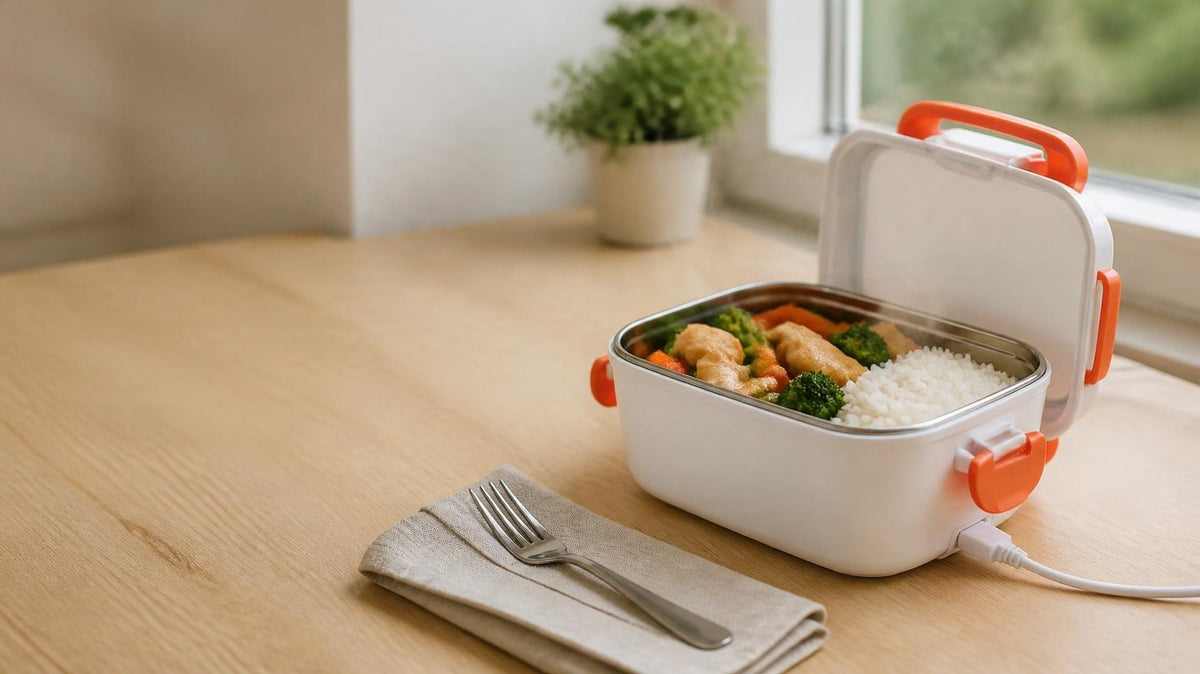
It's 11:20 on a Tuesday. The office microwave has a queue of six people and a smell of somebody's fish. Meanwhile your lunch has been sitting in a white box on the corner of your desk for the last hour, warming quietly, and all you have to do is unclip the lid. That's the whole case for a heated lunch box. Knowing how to use an electric lunch box well comes down to four habits: pack food that's already cooked, keep it cold until you plug it in, give it about an hour, and check that the middle is steaming hot before you eat. Get those right and it's the easiest hot lunch you'll ever have.
The short version
- Pack food that's already cooked. Electric lunch boxes warm food; they aren't built to cook raw ingredients.
- Keep it at 40°F (4°C) or below until you plug it in: a work fridge, or an insulated bag with two ice packs.
- Plug in about 60 minutes before you eat. Tests put most boxes at 45–60 minutes to reach 165°F (74°C).
- Only add water to the base if your manual says so. A spoonful stirred into rice or pasta keeps it moist.
How an electric lunch box actually heats your food
Think of it as a very small, very patient warming plate. A heating base sits under a removable food container, and once the power lead goes in, warmth rises slowly through the bottom of the dish. Because it uses far less power than a microwave, it takes longer. The trade-off is that rice stays soft and leftovers don't come out rubbery at the edges and cold in the center.
What it won't do is cook. Food Network's testers measured these boxes heating food to roughly 160–200°F, which is fine for warming dinner leftovers and nowhere near enough to take raw chicken or dry noodles from the bag to the plate. Our Youlva Electric Lunch Box is built on exactly that idea. It holds 1.5 L (51 fl oz) in most colors, the lid clips shut at the front and sides, there's a steam vent and a covered spot for your fork, and a light on the front tells you it's heating. One thing that light doesn't tell you is when the food is ready. More on that below.
You'll also run into two different designs when you shop or read manuals. Steam-type boxes want a measured splash of water poured into the base, and the steam does the warming. Direct-heat boxes warm the container itself and have no water step at all. Mixing them up is the most common first-day mistake, so check which one you own before anything else.
How to use an electric lunch box, step by step
Here's the routine we'd give a friend on their first week with one. It takes about two minutes the night before and about ten seconds at lunchtime.
1. Pack cooked food the night before
Spoon last night's dinner into the clean container in an even layer instead of a tall mound. Cut big pieces of meat or potato down to bite size so the heat reaches the middle. Rice and pasta dry out as they warm, so stir a tablespoon or two of water or sauce through them; the USDA suggests adding a little liquid and keeping food covered when you reheat for the same reason. Clip the lid on and put the container in the fridge.
2. Keep it cold until you plug it in
Here's where people get caught out. Bacteria multiply fastest between 40°F and 140°F, which the USDA calls the danger zone, and a heated lunch box is not a cooler. When Consumer Reports tested six of them, none could hold food at 40°F or below after just 20 minutes at room temperature. So if there's a fridge at work, use it. If there isn't, carry the container in an insulated bag with two cold sources, such as two frozen gel packs, one above the food and one below, as the USDA recommends for packed lunches. Perishable food shouldn't spend more than 2 hours at room temperature, or 1 hour when it's above 90°F.
3. Plug in about an hour before you eat
Put the container back on the base, fit the lid, open the steam vent and connect the power. On ours, the front light comes on and stays on while it heats. Most people land somewhere between 30 and 60 minutes for an ordinary portion; the next section explains why that range is so wide.
4. Check the middle, not the edge
The USDA's target for reheated leftovers is 165°F (74°C). For your first week, push an instant-read thermometer into the thickest part of the food. You only need to do this a handful of times. After that you'll know that your chili needs 50 minutes and your fried rice needs 35, and the thermometer can go back in the drawer.
5. Unplug, then open the lid
Disconnect the power before you unclip the lid and dig in. Food Network found that few of these boxes switch themselves off; most keep heating until you pull the plug. Leaving one running all afternoon is how you end up with a crust welded to the bottom of the tray.
How long does an electric lunch box take to heat up?
Anywhere from 20 minutes to an hour and a half, and three things decide where you fall: the box's wattage, how much food is in it, and how cold it was when you started. In Food Network's 2026 testing, most models took 45 minutes to an hour to bring an 8–9 oz portion of chicken and rice to 165°F, and the quickest got there in about 20. Owners on Reddit report the slow end too; one tradesperson plugs in 60–90 minutes before break, and others in a separate thread put their box at around 90 minutes for a full container.
We don't publish a heating time for our lunch box, and since its light shows heating rather than readiness, we'd rather you find your number than trust ours. Start an hour before you eat, take the temperature the first few times, and adjust. A half-full container of soft leftovers will be quicker than a packed one of dense stew straight from a cold fridge.
Do you put water in an electric lunch box?
Only if your manual tells you to. Steam-type models need water in the base, measured with the cup that came in the box. Direct-heat models don't, and pouring water into the wrong base is a good way to ruin it. The instructions for the Youlva lunch box have no water step: you pack the food container, fit the lid, open the vent and plug in. The care notes say to wipe the heating base with a damp cloth, never immerse it and keep the power socket dry. So keep water out of the base. Water belongs in the food itself, a spoonful or two stirred into rice or pasta so it steams gently instead of drying out.
What to put in an electric lunch box (and what to leave out)
Food Network's testers had their best results with moist, saucy dishes like casseroles, stews and pasta, and noticed that small pieces warmed faster and more evenly than thick chunks of meat. That matches what we see. Wet food passes heat along to itself; dry food just sits there getting hot on the bottom. Use this as a cheat sheet.
| Food | How to pack it | Heating note |
|---|---|---|
| Rice dishes, fried rice | Chill fast after cooking and pack it for the next day. Stir in 1–2 tbsp water. | Reheat once only, and check it's steaming hot all the way through. |
| Stews, curries, chili | Spread evenly rather than piling it high. | Dense food is slowest in the center, so check there. |
| Pasta in sauce | Add an extra spoonful of sauce. | Saucy pasta is one of the easiest lunches to heat. |
| Chicken or meat with vegetables | Cut everything to bite size. | Thick chunks heat slowly and unevenly. |
| Thick soups | Carry the box upright; our listing doesn't claim a leakproof seal. | Liquid passes heat around well. |
| Salad, cut fruit, sandwiches, anything crispy | Pack separately in the cold bag. | Don't heat these. Crisp food turns soft and salad wilts. |
Anything that should stay cold rides separately in the cold bag with the ice packs: salad, cut fruit, a jar of the yogurt we make in our yogurt maker guide. Keep it out of the box while it heats.
Can you put an electric lunch box in the fridge, or start from frozen?
Chill the food container, not the whole unit. The container is the part that touches the food, and getting it cold overnight is what keeps lunch safe on the commute; Consumer Reports suggests chilling the food tray for exactly that reason. The base carries the power socket, and our care instructions ask you to keep that dry. A cold base coming out into a warm room collects condensation, so leave it on the counter.
Frozen meals are a different question. Some boxes are rated to heat from frozen and some aren't. Ours is described for prepared meals, with nothing said about frozen food, so we'd thaw the portion in the fridge overnight, which the USDA counts as the safest way to thaw, and pack it in the morning.
Can you cook raw food in an electric lunch box?
No, and it's worth being blunt about it. A heated lunch box is a warmer, and our listing says plainly that it isn't designed to cook raw ingredients. If what you really want is instant noodles at your desk, a boiled egg in a dorm room or a small stew in a rented flat, that's a job for a portable electric cooking pot, which has a 600 W base and settings for noodles, stew and eggs.
Packing rice safely
Rice is probably the most packed lunch-box food there is, and it carries one specific risk. The UK Food Standards Agency explains that uncooked rice can contain spores of Bacillus cereus that survive cooking, and that the danger comes from how the cooked rice is stored before you reheat it. Their advice is simple: chill leftover rice quickly, ideally within an hour, keep it in the fridge no more than one day, reheat it only once and make sure it's steaming hot all the way through. In practice, pack last night's rice for today's lunch, not Thursday's, and never send leftovers from the lunch box back into the fridge for another round.
Cleaning it after lunch
Unplug the box and let it cool first. Then wash the food container and lid in warm water with a little mild detergent and dry them properly. The base only ever needs a wipe with a damp cloth. Never run it under the tap. Leave the lid off until every part is dry; a damp sealed box is how lunch boxes start to smell. If something did catch on the bottom, a soak in warm soapy water lifts it better than scrubbing.
Recommended for you

Cooks from raw
Portable Electric Cooking Pot, 1 L
For the meals a lunch box can't make: noodles, eggs, stew or a small hot pot. 600 W, 304 stainless steel interior. $49.99
View product
Meal prep
Electric Egg Cooker, 6 Eggs
Steams up to six eggs at once with one button, so a week of lunch-box eggs takes one go. $39.99
View product
Something to drink
Insulated Travel Tumbler, 750 mL
Dual-sip lid and folding handle for water or iced tea at your desk. SUS316 stainless steel interior. $42.99
View productElectric lunch box FAQ
How long does an electric lunch box take to heat up?
Usually 30–60 minutes, though it can run from about 20 minutes to 90. In Food Network's tests most boxes needed 45–60 minutes to bring chicken and rice to 165°F. Wattage, portion size and how cold the food starts all change it, so time your own meals with a thermometer for the first week.
Do you put water in an electric lunch box?
Only if your manual says to. Steam-type boxes need a measured amount of water in the base; direct-heat boxes don't. The Youlva lunch box has no water step, so keep water out of its base. A spoonful of water or sauce stirred into rice or pasta does help it heat without drying out.
Can you put an electric lunch box in the fridge?
Put the food container in the fridge overnight, not the whole unit. Chilling the container keeps food cold for longer on the way to work. The base holds the power socket, which should stay dry, and a cold base picks up condensation.
Can you cook raw food in an electric lunch box?
No. These boxes warm food that's already cooked, and the Youlva lunch box isn't designed for raw ingredients. To cook noodles, eggs or stew from scratch, use a portable electric cooking pot instead.
Can you heat frozen food in an electric lunch box?
Some models are rated for it, but ours is described for prepared meals and the listing says nothing about frozen food. Thaw the portion in the fridge overnight, then pack it in the morning.
Is it safe to leave food in an electric lunch box all morning?
Only if it's kept cold. Food shouldn't spend more than 2 hours at room temperature, or 1 hour above 90°F. Use a fridge or an insulated bag with two ice packs until you plug in. Once the food is hot, unplug and eat; don't leave the box heating all afternoon.
Your first week with it
Tonight, pack one portion of something saucy, like a curry, a chili or pasta in tomato sauce, into the container and put it in the fridge. Tomorrow, set a phone reminder for exactly 60 minutes before you plan to eat, plug in, and when the alarm goes, check the center with a thermometer. If it reads 165°F, that's your timing. If it doesn't, give it ten more minutes and write the new number down. Do that with your three most common lunches and you'll never stand in a microwave line again.
Packing hot lunches this week? The lunch box, cooking pot, egg cooker and rice cookers are all in one place.
Browse compact cooking & food prepSources
- USDA FSIS: Leftovers and Food Safety, for the 40–140°F danger zone, reheating to 165°F, adding liquid and covering food, and thawing in the fridge.
- USDA FSIS: Keeping "Bag" Lunches Safe, for the 2-hour (1 hour above 90°F) rule and packing two cold sources.
- Consumer Reports: Best Electric Lunch Boxes, for lab tests showing the boxes can't keep food at 40°F, and the tip to chill the food tray.
- Food Network: Best Electric Lunchboxes of 2026, Tested and Reviewed, for heating times, heating temperatures, auto-off, and which foods heat best.
- UK Food Standards Agency: Home food fact checker, for storing and reheating cooked rice.
- r/skilledtrades: Heated lunch box and r/Holdmywallet: Electric lunchbox, for owners' real-world heating times.
Youlva product details were checked against current listings on October 19, 2026.